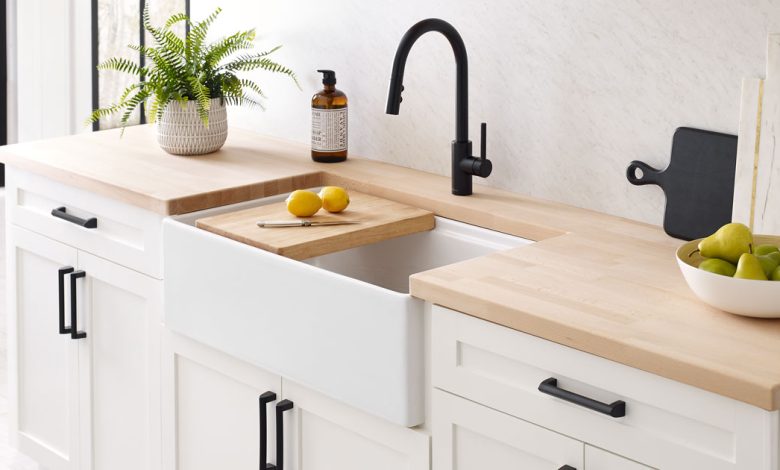
Water damage around a kitchen sink rarely announces itself with a dramatic flood. Most of the time, it begins as a quiet routine: a wet sponge left beside the basin, droplets running down the back of a pull-down faucet, a damp dish towel draped over an edge, or a slow drip under the cabinet that only shows up months later as a faint odor or swollen baseboard. Because the sink zone sees constant moisture, temperature swings, and daily handling, countertop materials fail in very different ways depending on how water reaches their vulnerable points.
Comparing quartz and butcher block around the sink comes down to understanding where moisture actually gets in and what happens once it does. Engineered quartz is dense and non-porous on its face, yet trouble still starts around cutouts, seams, and under-cabinet edges. Butcher block brings warm, tactile character to a kitchen, but wood fibers react directly to standing water, humidity shifts, and unsealed end grain. Knowing those weak spots helps homeowners pick the right surface for how they live and maintain it before small drips turn into costly repairs.
How Water Behaves on Quartz Around the Sink
Engineered quartz slabs are made primarily of crushed natural quartz bound together with polymer resins and pigments, pressed under intense heat and vibration. That manufacturing process creates a smooth, non-porous surface that resists everyday spills like coffee, wine, and pasta sauce far better than raw stone or unfinished wood. Standing water on the flat face of a quartz countertop generally sits on top until wiped away rather than soaking straight into the slab.
Even so, a quartz sink area is not immune to water-related problems. Mineral-heavy tap water can leave chalky calcium or magnesium deposits around faucet bases and sink rims if droplets dry repeatedly in the same spot. Those white rings look like surface staining or etching, though they are usually mineral buildup sitting on top of the stone that responds to gentle descaling rather than deep structural damage.
The real vulnerabilities around a quartz sink sit where two pieces meet or where water can travel past the finished surface. Undermount sink cutouts expose the interior edge of the slab, which relies on proper fabrication, smooth finishing, and watertight silicone or epoxy adhesive to keep moisture out of the joint. If a sink starts to loosen, or if water pools continuously along a slightly unlevel rim or poorly sealed seam, moisture can work into gaps or drip down toward the cabinet box below.
Heat paired with moisture creates another subtle hazard near sinks. Hot pans set right beside a wet basin or boiling water splashed onto a slab can stress the polymer resins over time, especially near edges or cutouts where thermal expansion is uneven. Quartz handles daily splashes with ease, yet it still depends on clean joints, sound adhesive, and smart habits around heat and standing puddles.
How Water Behaves on Butcher Block Around the Sink
Butcher block is built from glued strips or staves of hardwood—commonly maple, oak, walnut, or ash—and behaves like living wood even after it leaves the mill. Wood is hygroscopic, meaning it takes in and releases moisture as surrounding humidity and surface wetness change. When water sits on butcher block, especially where the protective finish has worn thin or never quite cured to full hardness, the wood fibers swell.
That swelling is rarely uniform across a whole countertop. A puddle left beside the faucet or behind an undermount sink can raise the grain, darken the wood, and create a slightly soft or fuzzy texture. Once moisture penetrates deeper, adjacent wood strips can expand at different rates, leading to cupping, warping, crowning, or separation along glue lines.
Finish choice makes a major difference in how butcher block handles sink duty. Penetrating oils and wax blends soak into the wood and offer rich feel and easy spot-repair, yet they do not form a thick plastic shield against prolonged puddles. Hardwax oils and marine-grade or catalyzed varnishes build stronger water resistance on top, though any nick, scratch, or worn patch near high-splash zones lets water bypass the barrier and reach bare timber.
Critical Failure Points Where Trouble Begins First
Faucet Holes and Deck-Mounted Accessories
Every hole drilled for a faucet, soap dispenser, filtered water tap, or air gap is an opening in the countertop. On quartz, water that creeps under a loose faucet escutcheon or soap pump can stay trapped in a dark, damp pocket, encouraging mildew or mineral crusting and occasionally seeping downward if the cabinet top lacks a tight seal. On butcher block, even a tiny gap around a faucet base acts like a wick, pulling moisture straight into the surrounding wood fibers every time someone washes their hands.
Sink Cutouts, Rims, and Exposed Edges
The perimeter of the sink is ground zero for moisture. Drop-in sinks press down onto the counter, while undermount sinks hang below a cut opening that leaves the slab edge exposed to splashes and dampness. On butcher block, sink cutouts expose end grain and cut edges that drink up water far faster than flat face grain; if those cut edges are not thoroughly sealed before installation, dark water stains and edge swelling often appear within months. On quartz, the cut edge is less absorbent than wood, yet a compromised silicone bead or sloppy seam around an integrated drainboard or backsplash can still let water sneak behind or beneath the stone.
Backsplashes, Wall Gaps, and Cabinet Tops
Walls in older or settling homes are rarely dead flat, leaving narrow gaps behind the back edge of a countertop. When water splashes toward the back of the sink or condenses near a window, it can run behind an unsealed backsplash and settle onto the top rail of the base cabinet. Over time, recurring moisture there warps particleboard or plywood cabinet boxes, loosens hardware, and causes paint or laminate to bubble long before the countertop face itself looks ruined.
Under-Sink Plumbing and Drips
Many sink water-damage stories start out of sight beneath the basin. A weeping P-trap, a loose supply line nut, a dishwasher drain hose connection, or condensation sweating off cold water pipes on humid summer days can drip onto the cabinet floor or up against the underside of the counter. Butcher block underside faces that are left raw or lightly finished are especially vulnerable to rising dampness and mold inside a closed cabinet, while quartz cabinets still suffer structural rot and lingering odors if hidden leaks go unchecked.
Comparing Daily Maintenance and Long-Term Risk
Living with quartz around the sink is generally lower-stress when it comes to routine moisture. Daily wiping with mild dish soap and water, occasional mineral removal with a non-abrasive cleaner, and checking that sink silicone stays intact usually keep the area in good shape. If a quartz seam ever fails or a sink detaches, a stone fabricator can typically re-adhere or re-seal the joint without replacing the entire top, provided the slab has not cracked.
Butcher block asks for more attentive habits around water, especially right next to the sink. Wiping up standing water promptly, keeping wet sponges off the wood on a drying mat or tray, and renewing oil, wax, or topcoat finishes on schedule are part of owning a wood counter. When localized water damage does happen on butcher block, light sanding and refinishing can sometimes erase surface staining and minor roughness, but deep warping, split glue joints, or dark rot around a sink cutout may require cutting out and splicing a new section or replacing the slab.
Practical Ways to Protect the Sink Zone
Regardless of whether you choose quartz or butcher block, a few straightforward precautions around the sink prevent most moisture headaches:
-
Keep standing water moving: Wipe around the faucet base and sink rim at the end of prep and cleanup rather than letting puddles sit overnight.
-
Elevate wet items: Place sponges, dish brushes, and soap bottles on a slotted tray, stone coaster, or sink caddy so moisture does not stay trapped against the counter.
-
Seal every cutout and joint: Make sure faucet mounting rings sit snug, sink seams have clean waterproof caulk or adhesive, and cut wood edges receive thorough sealing before and during installation.
-
Inspect under the sink regularly: Shine a flashlight under the basin every few months to check supply lines, traps, and cabinet bases for damp spots or faint musty smells.
-
Pair material with habits: Choose quartz if you want minimal fuss around heavy daily dishwashing and frequent splashes, or choose butcher block if you love natural wood warmth and enjoy hands-on care—or consider pairing a wood prep island with a quartz sink run.