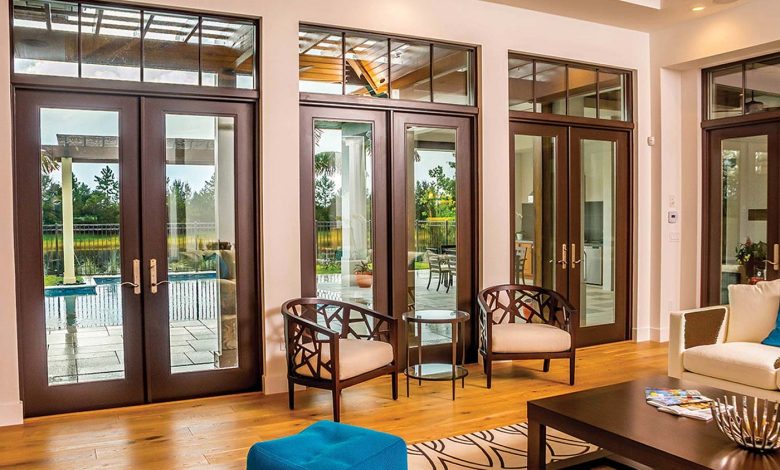
Wide sliding patio doors bring generous daylight and effortless backyard access into a home, right up until you try to cover them. Unlike a standard double-hung window that opens vertically and sits still most of the day, a patio door spans anywhere from six to sixteen feet wide and sees constant foot traffic. Standard horizontal blinds become impossibly heavy across that width, tangled cords turn into daily annoyances, and flimsy vinyl vanes clatter every time a breeze comes off the deck.
The secret to covering a wide patio door without sacrificing convenience is matching the movement of the window treatment to the movement of the door. When your shade, drapery, or track system glides sideways on low-friction hardware—and stacks neatly clear of the active doorway—opening the patio door feels natural rather than like an obstacle course. Choosing the right setup comes down to understanding track engineering, stack-back clearance, fabric weight, and how your household actually uses the door throughout the day.
Why Wide Patio Doors Break Ordinary Window Treatments
A standard 72-inch, 96-inch, or multi-panel telescoping sliding door puts mechanical demands on hardware that ordinary window coverings were never designed to handle. Weight is the first culprit. A single continuous shade spanning eight feet or more puts tremendous torque on roller tubes and mounting brackets, leading to sagging middles, uneven rolling, and frayed lift cords within a year or two.
Access friction is the second problem. If you install a single horizontal shade across the entire opening, someone has to raise eight feet of heavy fabric or slats just to let the dog out for thirty seconds. Over time, people stop lowering the shade altogether or yank it halfway up at an angle, straining the clutch mechanism. Side-to-side operating systems solve both issues by letting you part or slide only the section covering the active door panel while keeping the fixed glass shaded.
Sliding Panel Track Blinds for Clean, Modern Spans
Sliding panel track blinds are purpose-built for wide glass expanses, replacing narrow dangling slats with wide, flat fabric panels that glide along a multi-channel overhead aluminum track. Each panel attaches with hook-and-loop fastening strips to a wheeled carrier, allowing the panels to overlap smoothly when closed and stack neatly behind one another when open.
Because the carriers ride on ball-bearing or low-friction polymer wheels inside a rigid extruded track, even a twelve-foot span moves with minimal effort using a sleek fiberglass wand or cord loop. You can choose woven woods for warm organic texture, solar screen fabrics that cut glare while preserving your backyard view, or room-darkening weaves for media rooms and bedrooms.
One detail worth planning carefully with panel tracks is stack-back width. Because the panels do not fold like an accordion, the stacked bundle remains as wide as a single panel—typically 18 to 28 inches—when fully open. Mounting the track wider than the door frame on the wall lets the entire stack rest over adjacent drywall, keeping every inch of glass unobstructed.
Vertical Cellular Shades for Insulation and Compact Stacking
If your patio door faces harsh afternoon sun or winter drafts, vertical cellular shades deliver unmatched thermal performance alongside effortless side-to-side gliding. Built with honeycomb-shaped pockets turned vertically, these shades trap air inside structured cells that slow heat transfer through large panes of glass.
Unlike traditional vertical blinds that rattle and gap between individual slats, a vertical cellular shade forms a continuous pleated surface that glides along an aluminum headrail and bottom guide track. Because the honeycomb fabric compresses tightly like an accordion, an eight-foot shade can stack down to just six or seven inches when fully opened, making it ideal for doors flanked by tight walls, cabinetry, or corner trim where wide panel tracks will not fit.
Look for models offering split-draw or dual-operation configurations. A split-draw shade parts from the center like curtains, while a dual-operation system lets you slide the shade from either the left or right side—handy if you change furniture layouts or use both ends of a three-panel patio door.
Ripplefold Drapery on Heavy-Duty Traverse Tracks
When you want soft architectural lines without the snagging rings of traditional curtain rods, ripplefold drapery paired with an architectural traverse track is one of the smoothest-operating options available. Instead of pleated headers pinched onto rings that catch on center support brackets, ripplefold curtains snap onto wheeled carriers linked by an internal spacing cord inside a continuous aluminum channel.
That design eliminates center bracket interference completely. You can pull twelve or sixteen feet of floor-to-ceiling linen or sheer drapery across a patio door with a single tug of a baton or wand, and the fabric falls into uniform, S-shaped waves from end to end. Heavy-duty wheeled carriers keep thick blackout-lined panels gliding quietly without jerking or binding.
For homes with high traffic, consider pairing ripplefold drapery with a double-track setup—one sheer layer for daytime privacy and diffused light, and a heavier lined layer behind it for evening insulation and glare control.
Sheer Vertical Shadings for Soft Light Without Rigid Slats
For homeowners who miss the light-tilting control of traditional blinds but dislike rigid vinyl vanes, sheer vertical shadings offer an upscale hybrid. These systems suspend soft fabric vanes between two layers of sheer knit fabric, hanging from a sleek overhead track that slides open and closed smoothly.
Rotating the vanes with a wand tilts the louvers to angle sunlight away from television screens or dining tables, while closing them completely creates clean privacy. Because the sheer backing joins the vanes together, the panels move as a single cohesive unit without tangling, clacking in the breeze, or separating when pets brush past the doorway.
Hardware and Mounting Details That Make or Break Smooth Gliding
Even a premium shade will feel stiff or finicky if the mounting geometry overlooks a few practical details around a sliding door:
-
Account for door handles and locks: Protruding mortise handles and thumb turns often stick out one to two inches from the door stile. Choose outside-mount brackets or projection spacers that hold your track clear of the handle so fabric never snags as the door or shade moves.
-
Extend the track past the frame: Adding 12 to 24 inches of track beyond the door molding—when wall space allows—lets the open treatment clear the glass completely so people do not brush against fabric edges every time they walk outside.
-
Choose wand or motorized controls over long cords: Cordless wands and batons eliminate dangling loops around kids and pets and give you direct, intuitive control over how fast the panels slide. For extra-wide doors or tall transoms, quiet battery-powered or hardwired motorized tracks let you open the entire span with a wall switch or voice command.
-
Keep bottom clearance consistent: Measure floor height at multiple points across wide openings, as subtle floor slopes can cause full-length panels to drag on one side while hovering high on the other. Leaving a consistent half-inch clearance above the threshold or rug prevents premature hem wear.
Matching the Right System to Your Door and Routine
Every sliding patio door setup balances light control, wall space, and traffic flow differently. If you have generous wall space beside the door and want crisp, modern lines, sliding panel tracks provide effortless operation and clean architectural structure. If tight trim or nearby furniture limits stack room—or energy efficiency is a top priority—vertical cellular shades deliver slim stacking and reliable insulation. And when softness, acoustic absorption, and wide-span fluidity matter most, ripplefold drapery on a continuous traverse track turns an oversized glass wall into one of the easiest features in the house to use every day.