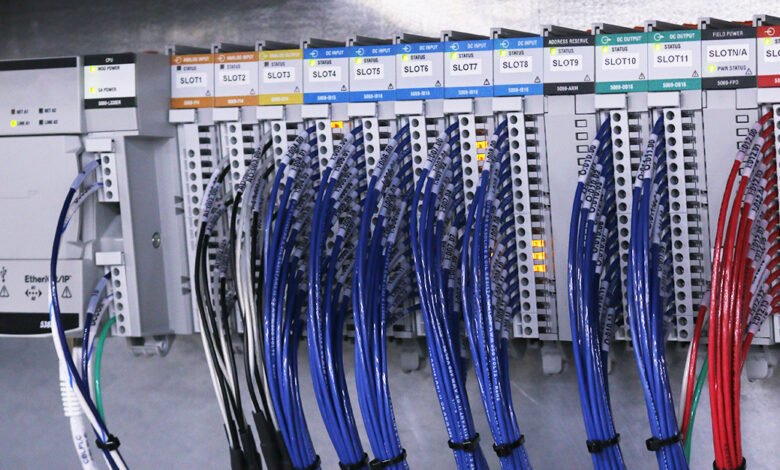
Industrial automation has transformed the manufacturing landscape the world over, an evolution nowhere more evident than in the bustling factories of Thailand. At the heart of this transformation lies the program logic controller (PLC), a technology that stands as a pillar of modern industry.
The program logic controller, commonly known as PLC, has become indispensable in contemporary industries due to its robustness and versatility. This cutting-edge technology streamlines operations, facilitating more efficient manufacturing processes that are vital to sustaining competitive advantage in the rapid pace of global markets.
But what exactly is PLC technology, and why is it so pivotal in the industrial sector of Thailand?
Understanding Program Logic Controllers
PLCs are specialized computers designed to control industrial processes. They are programmed to carry out a series of tasks, such as managing machinery or production lines, with precision and reliability. Able to withstand harsh industrial environments, they are resilient against dust, humidity, and temperature variations, common in the industrial settings of Thailand’s manufacturing hubs.
Redeeming the Value of Versatility
One of the key strengths of PLC technology lies in its adaptability. PLC systems can be tailored to a broad spectrum of applications, from the simple control of lighting systems to the intricate orchestration of entire assembly lines. This versatility makes them an essential component in diverse industries including automotive, food and beverage, electronics, and textile production — all prominent sectors in Thailand’s economic fabric.
Enhancing Efficiency and Productivity
Efficiency is the watchword when discussing the merits of PLCs in automation. The technology not only expedites production but also elevates precision and limits human error — leading to noteworthy improvements in overall productivity. For a country like Thailand, where manufacturing forms a fundamental segment of the economy, PLC technology enables local industries to keep pace with the exacting demands of the international market while supporting local job growth and skill development.
Commitment to Sustainability
In today’s world, where sustainability is increasingly paramount, PLC technology offers a pathway to greener automation processes. With features that include energy-saving operation modes and detailed monitoring capabilities, PLCs help companies in Thailand minimise their carbon footprint, a crucial step in meeting national and global sustainability goals.
The Future of Thai Industrial Automation
Looking ahead, the integration of PLCs into Thailand’s industrial sector will likely grow in both scope and sophistication. Seamless compatibility with the Internet of Things (IoT) and advancements in artificial intelligence (AI) are set to propel PLC technology to new frontiers, driving innovation and operational excellence.
For the workforce, understanding and skilled handling of PLC technology will become even more integral as the nation’s industries scale upwards and onwards. Initiatives to harness PLCs more effectively are bound to proliferate, featuring prominently in Thailand’s strategic plans for educational reform and workforce development.
The program logic controller is more than just a cog in the machine of industrial automation; it’s the lifeblood pumping through the sophisticated manufacturing processes propelling Thailand’s economy forward. By leveraging the power of PLC technology, the nation’s industrial sector can look forward to achieving greater heights of productivity, efficiency, and innovation, affirming its position on the global manufacturing stage.
In the grand narrative of Thailand’s industrial progression, the unfolding chapter on PLC technology is one of invigorating growth and boundless potential. The tale is far from over, but with PLCs in the protagonist role, it’s undoubtedly set to be an inspiring one.