In everyday conversation, advertising and marketing are often used interchangeably. However, in practice, they represent two distinct—yet closely connected—business functions. Understanding how advertising differs from marketing helps businesses allocate budgets wisely, build stronger brands, and achieve long-term growth.
This article breaks down the differences clearly, without jargon, while showing how both work together in real-world business strategy.
What Is Marketing?
Marketing is the broad, strategic process of identifying customer needs, creating value, and building long-term relationships with an audience. It begins long before a product is launched and continues even after a sale is completed.
Marketing focuses on the entire customer journey, from awareness to loyalty.
Key Elements of Marketing
Marketing includes a wide range of activities, such as:
- Market research to understand customer behavior and demand
- Product development and positioning
- Pricing strategies based on value and competition
- Distribution (place) decisions
- Brand building and reputation management
- Customer relationship management and retention
In simple terms, marketing answers the question: What should we offer, to whom, and why should they care?
What Is Advertising?
Advertising is a specific component within marketing. It refers to paid communication designed to promote a product, service, or brand through selected media channels.
Advertising is primarily concerned with visibility and persuasion.
Common Forms of Advertising
Advertising typically appears in formats such as:
- Television and radio commercials
- Digital ads (search, display, social media)
- Print ads in newspapers and magazines
- Outdoor advertising like billboards
- Sponsored content and influencer promotions
Advertising answers a narrower question: How do we get this message in front of the right people right now?
The Core Difference Between Advertising and Marketing
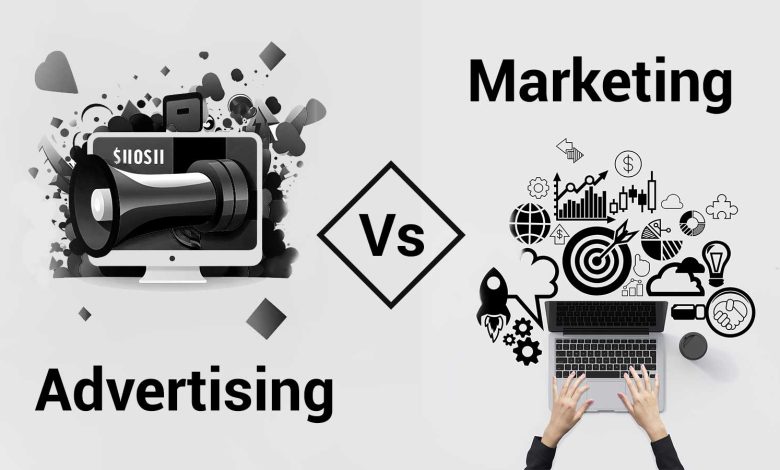
The most important distinction lies in scope and purpose.
- Marketing is the strategy
- Advertising is the execution
Marketing defines the overall plan, while advertising delivers specific messages within that plan.
Key Differences at a Glance
- Scope
- Marketing covers research, branding, pricing, distribution, and promotion
- Advertising focuses only on promotion
- Timeline
- Marketing is long-term and ongoing
- Advertising is often short-term and campaign-based
- Objective
- Marketing builds relationships and value
- Advertising drives awareness and immediate action
- Customer Interaction
- Marketing involves two-way engagement
- Advertising is mostly one-way communication
How Advertising Fits Into the Marketing Strategy
Advertising does not exist in isolation. It works best when aligned with broader marketing goals. For example:
- A marketing strategy identifies a target audience
- Marketing defines brand voice and positioning
- Advertising communicates that message through chosen channels
Without marketing, advertising becomes random and ineffective. Without advertising, marketing struggles to scale its message.
Why Businesses Need Both Marketing and Advertising
Relying on advertising alone may generate short-term sales, but it rarely builds trust or loyalty. On the other hand, strong marketing without advertising may limit reach and visibility.
Successful businesses use both to:
- Attract the right audience
- Communicate clear value propositions
- Build brand recognition and credibility
- Convert prospects into loyal customers
Real-World Example
A company launching a new fitness app might use marketing to:
- Research customer pain points
- Define the app’s unique benefits
- Decide pricing and subscription models
Advertising would then:
- Promote the app through social media ads
- Run video campaigns showcasing features
- Drive downloads during launch periods
Both roles are essential, but they serve different purposes.
Conclusion
The difference between advertising and marketing lies in breadth and intent. Marketing is the comprehensive process of understanding customers and delivering value, while advertising is one of the tools used to communicate that value at scale.
When businesses clearly understand this distinction, they can create smarter strategies, avoid wasted budgets, and build sustainable growth.
Frequently Asked Questions (FAQs)
1. Can a business succeed without advertising?
Yes, some businesses rely on word-of-mouth, referrals, or organic marketing channels, but growth is often slower without advertising.
2. Is digital marketing the same as digital advertising?
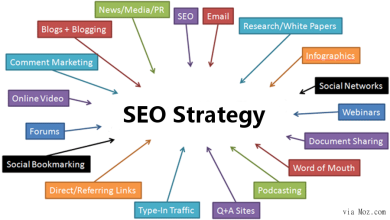
No. Digital marketing includes SEO, content marketing, email marketing, and analytics, while digital advertising focuses only on paid promotions.
3. Which is more important: marketing or advertising?
Marketing is more important overall because it defines strategy, while advertising supports and amplifies it.
4. Does advertising always require a large budget?
Not necessarily. Digital platforms allow small businesses to advertise effectively with modest budgets when targeting is done correctly.
5. Who is responsible for advertising in a company?
Advertising is usually handled by marketing teams, agencies, or media specialists as part of the broader marketing function.
6. How do branding and advertising differ?
Branding shapes how people perceive a business over time, while advertising communicates specific messages to promote that brand.
7. Can marketing exist without selling?
Yes. Marketing can focus on education, awareness, and relationship-building without directly pushing for immediate sales.