Traditional security mechanisms reliant on alphanumeric passwords, personal identification numbers, and physical access cards face escalating threats from advanced cyberattacks, credential stuffing, and social engineering. As digital systems demand stronger trust foundations, biometric authentication has emerged as a premier defense strategy. By leveraging unique physiological and behavioral characteristics, biometrics provide a seamless and highly secure method for verifying user identity. However, because biological traits cannot be changed if compromised, implementing robust data security protocols is paramount to protecting users from catastrophic identity theft.
Major Biometric Authentication Methods
Biometric modalities fall into two primary categories: physiological traits, which examine body structure, and behavioral traits, which analyze unique patterns in human actions. Each method offers distinct advantages and security trade-offs depending on the deployment environment.
-
Fingerprint Recognition: This is the most widely adopted biometric modality, utilizing optical, capacitive, or ultrasonic sensors to map the ridge and valley patterns of a fingertip. Capacitive sensors, common in mobile devices, measure electrical current to map detailed friction ridges, making them difficult to spoof with simple ink prints.
-
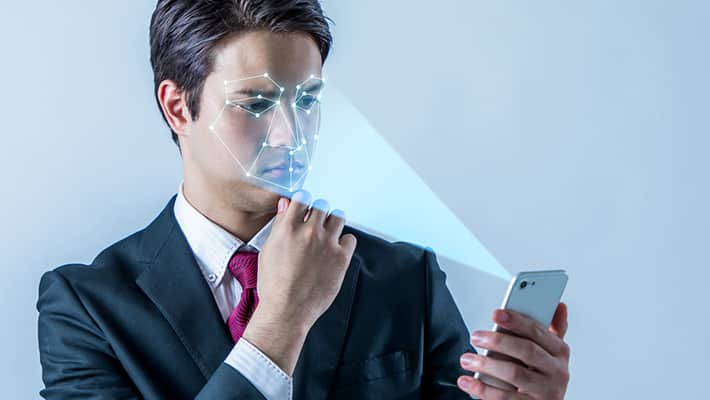
Facial Recognition: Advanced facial mapping systems analyze geometric distances between facial landmarks, such as the distance between the eyes, the depth of eye sockets, and the contour of the jawline. Combined with infrared depth sensing, modern implementations build a three-dimensional model to prevent spoofing via printed photographs.
-
Iris and Retina Scanning: Iris recognition scans the unique colored rings of the eye, which remain stable throughout a person’s life. Retina scanning examines the blood vessel patterns at the back of the eye. Both offer exceptionally high accuracy rates, making them ideal for high-security facilities like border control checkpoints and government installations.
-
Voice Recognition: Behavioral and physiological voice biometrics evaluate vocal tract shape, pitch, cadence, and speaking style. While convenient for telephone banking and smart home assistants, voice authentication can be vulnerable to high-fidelity audio recordings unless paired with robust liveness detection algorithms.
How Biometric Data is Processed and Stored Securely
A common misconception is that biometric systems store high-resolution photographs of faces, full audio recordings of voices, or pristine images of fingerprints in a central database. Storing raw biometric data would create an unacceptable security risk, as a single database compromise would permanently expose immutable user data.
Instead, modern security architectures employ a process called feature extraction and template creation. When a user enrolls in a system, the capture device records the biometric sample, isolates the unique characteristics, and converts those features into a mathematical algorithm or numerical vector hash. The raw image or audio file is discarded immediately.
Once the template is generated, it is stored within a secure hardware enclave, such as a trusted platform module or a dedicated cryptographic co-processor on a device. When a user attempts to authenticate later, the newly captured sample is converted into a temporary template and compared against the stored template using a matching algorithm. Because the system compares numerical hashes rather than raw pictures, malicious actors who intercept the data stream obtain only meaningless strings of numbers.
Vulnerabilities and Attack Vectors in Biometric Systems
Despite their high security posture, biometric systems are not entirely immune to attacks. Security engineers continuously defend against several prominent threat vectors targeting both the sensor layer and the backend infrastructure.
-
Presentation Attacks: Also known as spoofing, presentation attacks occur when an unauthorized user presents a fake biometric artifact to the sensor. Examples include silicone fingerprint molds, printed photographs or digital video replays for facial recognition, and synthetic voice clones generated by artificial intelligence.
-
Template Interception: If communication channels between the biometric sensor and the central processing unit lack proper encryption, attackers can intercept data packets during transmission and attempt to replay them into the system.
-
Database Compromise: Although raw images are generally not stored, poorly protected template databases can be subjected to inversion attacks, where malicious actors attempt to reconstruct approximate facial images or fingerprint patterns from the stored mathematical vectors.
-
Insider Threats: Unauthorized employees with administrative privileges inside an organization can potentially access system logs or enrollment registries, highlighting the need for strict role-based access control and comprehensive auditing.
Best Practices for Securing Biometric Systems
Mitigating the risks associated with biometric authentication requires a defense-in-depth strategy that combines hardware protections, cryptographic safeguards, and continuous system monitoring.
-
Implement Liveness Detection: Software-level and hardware-level liveness checks force the system to verify that the biometric sample comes from a living, breathing human present at the sensor. This includes analyzing micro-movements, skin texture, infrared reflections, or requiring interactive prompts like blinking or smiling.
-
Enforce Multi-Factor Authentication: Biometrics should rarely stand alone as the sole authentication factor. Combining a fingerprint or facial scan with a secure PIN, a hardware security key, or a time-based one-time password creates a multi-layered barrier that is exponentially harder to breach.
-
Utilize End-to-End Encryption: All biometric data packets must be encrypted using strong protocols both while in transit across internal networks and while resting in local or cloud storage environments.
-
Adopt Revocable Biometrics: Advanced cryptographic frameworks allow systems to apply randomized transformations to biometric templates. If a transformed template is ever compromised, the system can revoke that specific transformation key and issue a new one without altering the underlying biological record.
Frequently Asked Questions
Can a fingerprint sensor be fooled by a severed or artificial finger?
Most modern capacitive and ultrasonic fingerprint sensors require electrical conductivity and internal pressure variations to register a valid reading, which successfully prevents simple artificial molds or non-living materials from bypassing the sensor.
What happens if a person suffers an injury that alters their biometric features?
Temporary injuries, such as a bandaged finger or severe facial swelling, can temporarily disrupt biometric matching. Most systems account for minor bodily changes by updating templates incrementally over time, and they always provide secondary backup authentication methods for account recovery.
Is biometric data protected by international privacy regulations?
Yes, regulatory frameworks such as the General Data Protection Regulation explicitly classify biometric data as sensitive personal information, imposing strict legal requirements on organizations regarding user consent, data minimization, and secure storage.
How does environmental lighting affect facial recognition security?
Traditional visual light cameras experience reduced accuracy in pitch-black or excessively bright environments. Modern security systems resolve this limitation by utilizing infrared illuminators and depth sensors that operate independently of ambient lighting conditions.
Can behavioral biometrics protect devices continuously during a session?
Yes, continuous authentication monitors behavioral patterns such as typing cadence, mouse movement dynamics, and smartphone holding posture throughout an entire user session, automatically locking the device if behavioral anomalies suggest an unauthorized user has taken over.
Why do some financial institutions prefer voice biometrics over other methods?
Voice biometrics allow seamless, hands-free authentication over standard telephone lines during customer service calls, verifying identity within seconds through conversational prompts without requiring physical hardware tokens.